Trouble viewing in your email client? View web version.
|
Water Workforce Development Tribune
|
Hybrid Option Available
|
CRWA is proud to offer hybrid training opportunities through our new Owl system! This innovative technology gives participants the flexibility to attend trainings either in person or online, making it easier to participate no matter where you are located. The Training Owl helps create an interactive learning environment for remote attendees, allowing everyone to stay involved and engaged during class.
As we continue expanding our training opportunities, CRWA remains committed to providing accessible, convenient, and high-quality education for water and wastewater professionals. Whether attending from the classroom or remotely, participants can expect the same valuable training experience.
Be sure to check each registration flyer for hybrid attendance options!
|
|
|
|
|
|
TRAINING SPOTLIGHT
|
The June training schedule has arrived, offering courses to help you sharpen your expertise, prepare for exams, and continue growing in the field. Here are a few highlights!
Coldwell Energy (FREE)
June 3 | Online
In this 1-hour Lunch & Learn, Coldwell Energy will discuss how utilities can reduce Scope 1 and 2 GHG emissions, improve resilience, and lower energy costs through solutions like solar PV, battery storage, EV charging, and efficient lighting.
AB54
June 15 | Online This webinar-based course fulfills the two-hour AB-54 Director Training Requirement for Mutual Water Company board members, covering legal responsibilities, drinking water compliance, and long-term system management.
Treatment Certification Review – Grades 1-2
May 27–28 | Palmdale
Take the next step with advanced certification prep designed for experienced operators.
These trainings are designed to give you the tools and knowledge needed to succeed in the field.
|
|
Grindstone Rancheria: Achieving Compliance and Operational Knowledge
|
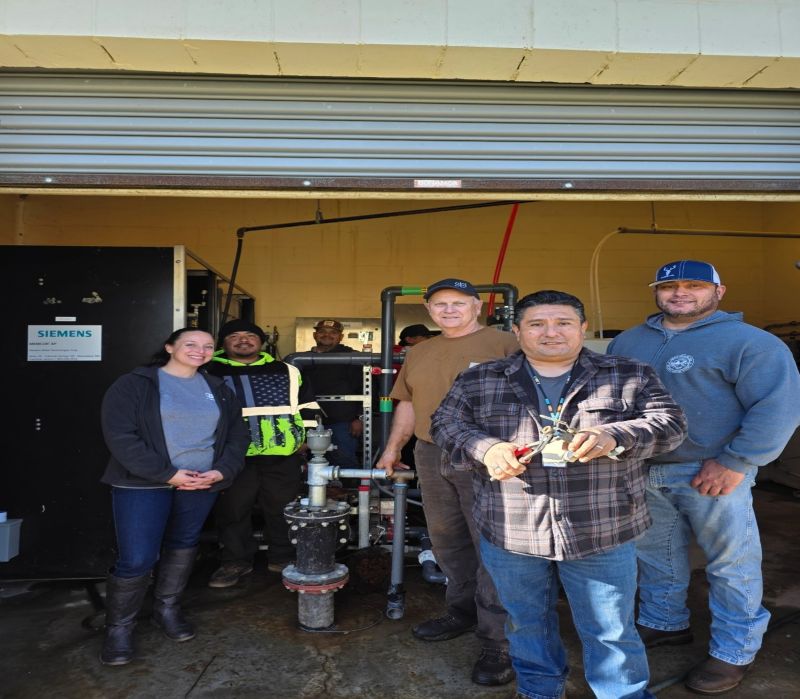
CRWA continues to support small and rural communities through hands-on technical assistance and operator training programs. One recent example is the collaborative effort underway at the Grindstone Rancheria in Northern California, where local staff are working alongside CRWA, the Indian Health Service, RCAC, and other partners to improve water system operations and restore regulatory compliance. The community’s water system, which serves approximately 150 residents, has faced several operational and reporting challenges, including treatment plant performance issues and a long-standing boil water notice.
Through ongoing training, onsite guidance, and mentorship, Grindstone staff are gaining the knowledge and certifications needed to operate and maintain the system effectively. CRWA has assisted with emergency response planning, compliance reporting, operator training, and treatment plant troubleshooting. Staff members have also begun attending CRWA training courses and plan to participate in the upcoming apprenticeship program to further strengthen their technical skills and understanding of water system operations. This partnership highlights the importance of collaboration in protecting public health and ensuring safe, reliable drinking water for rural communities.
|
|
|
Emerging Contaminants: Where to Go for Information and Beyond
|
The State Water Resources Control Board’s website is full of information regarding our State’s Drinking Water, it is a critical resource to obtain necessary information regarding all areas of drinking water. Check out the website: https://www.waterboards.ca.gov/drinking_water/programs/
Of particular interest is the Emerging Contaminants website. https://www.waterboards.ca.gov/drinking_water/certlic/drinkingwater/EmergingContaminants.html
This page includes everything you need to know about new and emerging contaminants that pertain to drinking water and to recycled water.
According to the SWRCB:
New and emerging contaminants are unregulated and may be new contaminants (e.g., MTBE, now regulated in California) or those that may have been present but not detected (e.g., perchlorate and 1,2,3-trichloropropane, now also regulated in California). Other examples of such contaminants are PFAS, microplastics, NDMA and other nitrosamines, cyanotoxins from harmful algal blooms, and 1,4-dioxane.
Also among the emerging contaminants are pharmaceuticals and personal care products, industrial chemicals present at low concentrations, and chemicals that may affect hormone status, referred to as "endocrine disruptors.”
To keep your system in compliance with the State, visit the website to ensure that applicable procedures and policies are being followed as directed and that the testing includes all the newly added contaminants. If you have any questions, CRWA is always here to answer your questions or direct you where to go for answers.
|
|
|
System Spotlight: Dos Palos
|
The City of Dos Palos is making major progress on its new water treatment plant, a project designed to replace the city’s aging 1969 facility and improve long-term water reliability and quality for the community. Construction is currently ahead of schedule, with the new plant expected to be operational by late 2025 or early 2026. The upgraded facility will treat up to 4 million gallons of water per day and will include modern filtration systems, pretreatment processes, powdered activated carbon systems, and solar panels to support efficient operations.
The project addresses ongoing challenges at the existing plant, including aging infrastructure, algae-related water quality concerns, and increasing demand on the system. Supported through state funding and financing assistance from RCAC, the new facility will help ensure safe, reliable drinking water for Dos Palos residents for years to come. Construction is being managed by W.M. Lyles Co., with work now in its final stages.
|
|
|