Trouble viewing in your email client? View web version.
|
Water Workforce Development Tribune
|
|
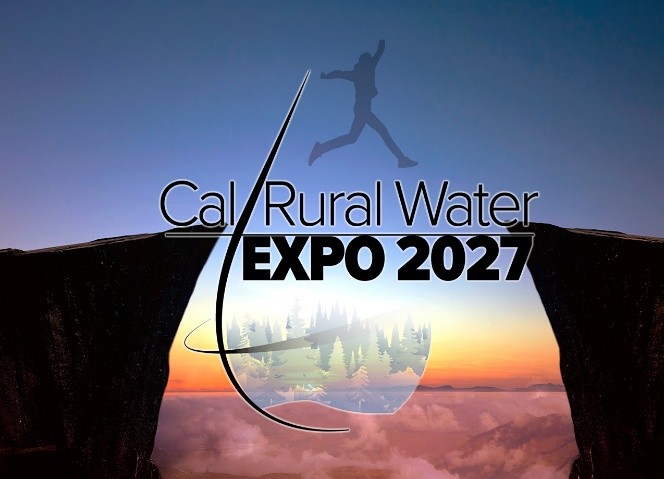
CRWA Expo 2027
|
|
Learn • Connect • Grow in Lake Tahoe!
May 10–13, 2027 | South Lake Tahoe
EXHIBITOR REGISTRATION IS NOW OPEN!
Join CRWA Expo 2027 for four days of education, networking, innovation, and industry connections in beautiful Lake Tahoe!
Conference: Bally’s Lake Tahoe Exhibit Show: Tahoe Blue Events Center Wednesday, May 12 | 1:00–5:00 p.m. Lunch with Exhibitors | 12:00–1:00 p.m.
Showcase your products, services, equipment, and technology while connecting with water and wastewater professionals from across California. Expo 2027 is a great opportunity to increase visibility, build relationships, and connect with industry leaders.
More Information & Registration: calruralwater.org/expo Questions: Candice Jackson | 916-283-8502 | candicej@calruralwater.org
Come for the education. Stay for the connections. See you at CRWA Expo 2027!
|
|
|
|
Upcoming Workforce Trainings
|
AWE Backflow Certification Course
| October 5 - 9 | Sacramento | FULL |
AWE Water Treatment O&M
| October 19 - 23 | Sacramento |
Sampling, TCR, & Microbiology
| October 21 | Apple Valley |
Treatment Certification Review 1-2
| October 21 - 22 | Tehachapi |
Wastewater Certification Review 1-2
| October 28 - 29 | Stockton |
FREE - Emerging Contaminants & Sampling
|
|
|
TRAINING SPOTLIGHT
|
October is packed with valuable training opportunities, including several courses that will be offered for the final time in 2026. Whether you’re looking to earn contact hours, prepare for an upcoming certification exam, or strengthen your skills, now is the perfect time to register and secure your spot!AWE Backflow Certification Course
October 5 - 9 | Sacramento | FULL - Check back in for the 2027 schedule AWE Water Treatment O&M
October 19 - 23 | Sacramento | This course prepares students for the Grade 1 and Grade 2 Water Treatment Operator Exams and satisfies the 36-hour Specialized Training Requirement for Grade 2. Sampling, TCR & Microbiology
October 21 | Apple Valley | This course covers Class A and B sampling procedures, proper sampling techniques and plans, personal hygiene, recordkeeping and reporting, bacteriological sample-site mapping, the Revised Total Coliform Rule, and Consumer Confidence Reports (CCRs). FREE - Emerging Contaminants & Sampling
October 29 | Chester | This course covers contaminants of emerging concern, including their sources, identification, environmental impacts, treatment methods, and appropriate wastewater sampling, recordkeeping, and reporting procedures. Don’t miss your opportunity to take advantage of these October training opportunities! Several courses are among the last offerings of the year, and space may be limited. Visit our website today to view the full training schedule and register!
|
|
|
CoBank announces upcoming utility credit webinar with S&P Global
|
|
Rural water systems utilities are facing growing pressure to balance infrastructure investment, customer affordability, regulatory requirements and long-term financial sustainability. To help water leaders navigate these challenges, CoBank and S&P Global are co-hosting a water utility credit webinar on Oct. 21, 2026 at 9 a.m. MT. This webinar will examine how water systems respond to rising infrastructure costs, evolving federal drinking water regulations, cybersecurity concerns and affordability pressures — and what these forces could mean for financial planning and credit quality. Teri Viswanath, CoBank’s lead water economist and Kurt Forsgren, managing director, S&P Global, will share their perspectives on what rating agencies are watching, how utilities can strengthen their financial position and what leaders should plan for the future. Register now for the “Water utility credit trends: Navigating risk, regulation and affordability” webinar. Visit CoBank’s new water research hub with timely analysis, industry trends and practical insights tailored to the challenges and opportunities facing rural water systems today.
|
|
|
Have a Facility That Could Host a CRWA Training?
|
Want to bring CRWA training closer to your community? CRWA is always looking for quality facilities throughout California to host upcoming water and wastewater training courses. Hosting a course can be a great way to provide valuable training opportunities to local operators while helping make professional development more accessible to systems in your area.Facilities with a comfortable classroom or training space, adequate seating, tables, restrooms, and the ability to accommodate instructors and attendees may be a good fit. Depending on the course, additional requirements such as internet access, audio/visual equipment, or hands-on training space may be needed. Hosting a CRWA course can also help connect your organization with operators and water professionals from surrounding communities, creating opportunities for networking, knowledge-sharing, and collaboration.
If your facility may be a good fit, we’d love to hear from you! Reach out to Ashley Foltz at afoltz@calruralwater.org to learn more about facility requirements, hosting opportunities, and upcoming courses.
|
|
|
Good Housekeeping Practices For Your Water System
|
|
Whether surface water or ground water, these are the areas that the Utility should have complete control over. • Always prevent unauthorized access to the site except for Utility employees.
• Always keep the sites clear of contaminates and eliminate pathways of contamination.
• Synthetic and/or volatile compounds should never be near any of the water supplies.
• Ensure abandoned wells have been properly abandoned.
• Keep storm drains clear and free from discharges.
• Ensure all equipment is properly maintained, stored safely and all personnel are properly trained in the operation and maintenance of equipment.
• If hazardous products such as chloride, chlorine and gases are stored, follow the product for proper storage, use and handling.
• If there is waste stream storage, ensure that state and federal regulations are followed in the transfer and disposal of the waste.
• All certifications for operators, staff and Board members must be kept up to date. Utilize training classes in person or online to keep personnel apprised of regulatory requirements.
|
|
|