Trouble viewing in your email client? View web version.
|
Florida Water & Wastewater News
|
|
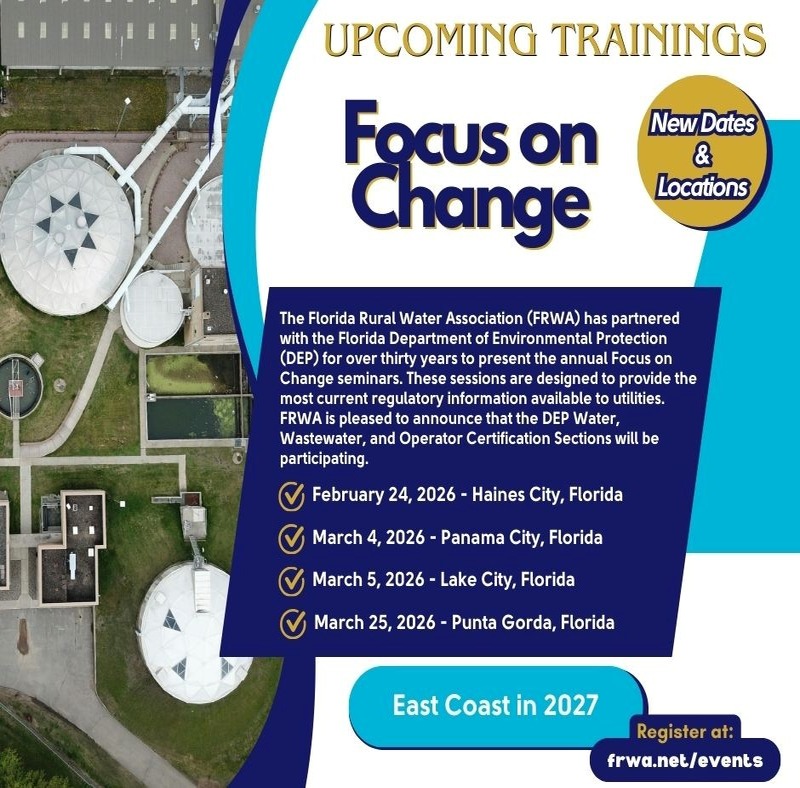
Emergency Preparedness, Response, and Recovery in Gainesville
|
EVENT DETAILS
https://www.frwa.net/events/emergency-preparedness-response-and-recoverygainesville031726-
This workshop was designed to give Water and Wastewater Utility staff hands on training in Emergency Preparedness, Response, and Recovery. Items covered will include:
• How to update Emergency Response Plans
• Provide experiences and lessons learned from past natural or man-made emergencies
This workshop will also provide training in the WaterTracker Program used during an Emergency Response. Items covered will include:
• How to update Emergency Contacts
• How to post needs and/or available resources during an emergency event
• How to complete and upload a Mutual Aid Agreement
• 0.6 DW, 0.6 DS, or WW CEUS/6.0 PDHs
|
|
|
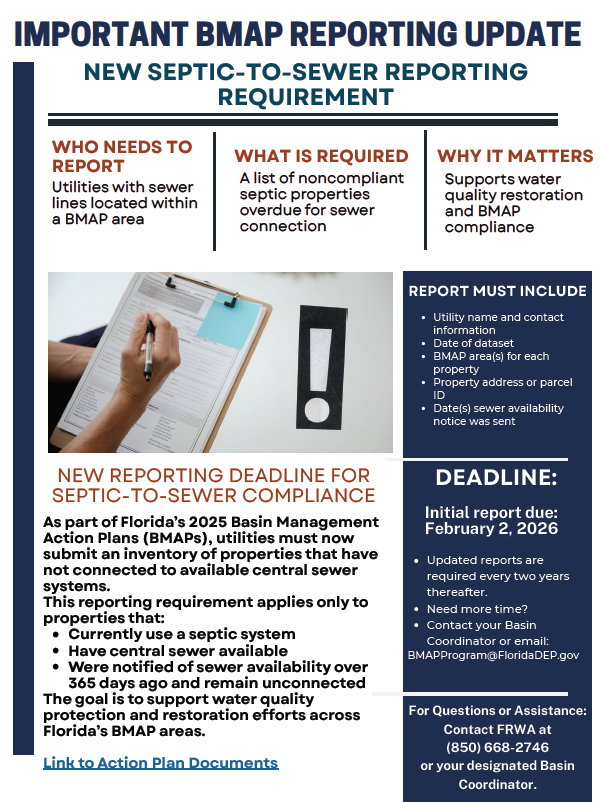
Basin Management Action Plan Reporting
|
|
EPA Proposes Revisions to Clean Water Act Section 401 Certification Rule
|
The U.S. Environmental Protection Agency (EPA) has announced a proposed rule to revise the regulatory requirements under Section 401 of the Clean Water Act (CWA). Section 401 gives states and authorized tribes the authority to certify that federally permitted projects will comply with water quality standards before a federal license or permit is issued. The proposed changes, announced on January 13, 2026, aim to increase transparency, efficiency, and predictability in the water quality certification process and better align current regulations with the statutory intent of the CWA. Once published in the Federal
The proposal will open a 30-day public comment period, and the EPA plans to finalize the rule in Spring 2026.
|
|
|
Data Centers Prompt Florida Water Reuse Strategy
|
Florida is preparing for rapid data center growth driven by AI and cloud demand. Large facilities can consume hundreds of thousands of gallons per day for cooling, pressuring potable systems; in one example, a data center in Newton County, Georgia represents roughly 10% of countywide daily use and has prompted warnings about future deficits. Utilities may need targeted investments in reclaimed sources and supply upgrades to prevent competition with drinking water.
Across the industry, utilities and suppliers are advancing non‑potable cooling solutions such as advanced wastewater treatment, onsite reuse, and decentralized systems; firms like Eco World Water are developing compact units for industrial reuse. For Florida locations being considered for data centers (including parts of Palm Beach, St. Lucie, and Polk counties), best practices include: securing reclaimed-water supplies, integrating cooling-water reuse early in site design, and establishing cost-sharing agreements with high‑demand users. Implication for FRWA members: early coordination with developers and clear reuse performance standards can reduce rate impacts and safeguard potable supplies.
|
|
|