|
Water Workforce Development Tribune
|
Expo 2026!
|
Get Ready for Our 2026 Expo: April 27–30!
We’re thrilled to announce that our biggest event of the year is coming this spring—and it’s shaping up to be our most exciting Expo yet! Mark your calendars for April 27–30, 2026, because you won’t want to miss four action-packed days filled with inspiring sessions, hands-on learning, and tons of opportunities to grow your professional skills.
This year’s Expo will feature a wide variety of contact hours, dynamic speakers, interactive workshops, and fresh content designed to energize your practice and elevate your expertise. And yes, back by popular demand—there will be amazing prizes, special giveaways, and fun Expo-floor surprises throughout the event!
The best part? Registration opens January 2026, and spots are expected to go quickly. Whether you're looking to earn continuing education credits, connect with industry leaders, or simply recharge with an upbeat professional community, this is the event you won’t want to miss.
Stay tuned for registration details—get ready to learn, connect, and celebrate with us at the 2026 Expo!
|
|
|
|
Upcoming Workforce Trainings
|
DT Cert Review 3
DT Cert Review
| Decemeber 10-11, Eureka, San Jose, and Oxnard |
AB54
DT Cert Review
| December 17-18, Clovis and Nipomo |
Total Coliform Rule & Sampling Plan Techniques (Distance Learning)
| December 18, Tehachapi (Online as well) |
|
|
|
Fee Training
|
|
Our final certification review and fee-based training classes of the year are right around the corner, your last chance to lock in those all-important contact hours or get the test prep support you need before the year wraps up! These sessions are designed to be engaging, practical, and confidence-boosting, whether you're polishing your skills or gearing up for your big exam. Don’t miss this opportunity to learn from expert instructors, connect with peers, and finish the year strong. Secure your spot now and step into the new year feeling prepared and energized!
|
|
|
Strickland Mutual Water Company – Leak Detection Assistance
|
On November 1, 2025, Disaster Recovery Circuit Rider Abel Silva was contacted by Board Member David Gomez of Strickland Mutual Water Company. The small system, serving an older neighborhood in Oxnard, has experienced repeated service-line leaks and was concerned about undetected losses in its aging infrastructure.
Through the California Rural Water Association’s Disaster Recovery Circuit Rider (DRCR) program, qualifying small water systems in eligible counties continue to receive no-cost technical assistance, including professional leak detection services.
Abel conducted a thorough acoustic survey of approximately 62 service connections on the following streets:
• Joan Way
• Burson Way
• Perry Way
Using the FCS Touch Pro Ground Microphone—an advanced, mid-range electronic listening device that eliminates ambient noise and isolates leak sounds at each point of contact—only one active leak was identified. The leak was located on the customer side of the meter.
The affected customer was notified immediately and expressed relief, noting that their water bill had been steadily increasing, and they now knew the cause.
Summary: As of November 19, 2025, no leaks were found on the utility-owned portion of the Strickland Mutual Water Company system.
Thanks to the support of the CRWA Disaster Recovery Circuit Rider program, Strickland MWC now has documented confirmation that their distribution system is currently leak-free on the company side—providing valuable peace of mind at no cost to the system.
We appreciate the opportunity to serve California’s small water systems. If your community needs similar assistance, please don’t hesitate to reach out. | 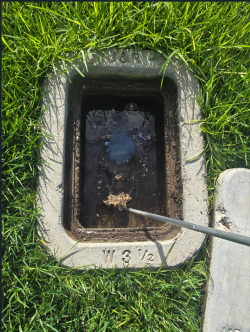 |
|
|
|
Roles and Responsibilities of a Nonprofit Board
|
One of the most common challenges facing nonprofit boards is a lack of clarity around the roles and responsibilities of individual board members. Although it may seem fundamental, many boards struggle because members are not fully aware of what is expected of them. Since no one can perform effectively without understanding their duties, it is essential for every board to ensure that all members have a clear grasp of their responsibilities and are held accountable when they deviate from them.
A strong foundation begins with understanding the three primary legal duties of board service:
• Duty of Care – Board members are legally required to actively participate in decision-making and to use their best judgment when acting on behalf of the organization.
• Duty of Loyalty – Members must prioritize the organization’s interests above their personal or professional interests when making decisions. The needs of the organization should always come first.
• Duty of Obedience – Board members are responsible for ensuring that the organization complies with all applicable federal, state, and local laws and remains faithful to its mission. This includes oversight of mission adherence and organizational obligations such as liability insurance.
These legal duties represent only the foundation of board service. BoardSource further defines the broader scope of board responsibilities in its widely recognized publication Ten Basic Responsibilities of Nonprofit Boards, which outlines the core expectations for both individual members and the board as a whole. BoardSource also offers a self-assessment tool to help boards evaluate their performance across these key areas.
The governance committee plays an essential role in maintaining clarity and alignment around board responsibilities. This includes providing ongoing education and development for board members, as well as guiding regular performance assessments to ensure the board remains effective, informed, and mission-focused.
|
|
|
Operator Training Opportunities
|
Coming in December to a location possibly near you. Two classes, one on Boil Water Orders and one on Leak Detection Principals, Mapping and Line Locating.
These classes are provided free of charge through CRWA and taught by Michael Sims.
MOJAVE WATER AGENCY: Boil Water Orders
Learn all there is to know about the BWO. BWO’s are issued when more than one monthly sample is total coliform positive or if any sample is positive for E. coli or fecal coliform.
Coliform bacteria are naturally present in our environment and are used as a precursor to indicate that other potentially harmful bacteria may be present. Fecal coliforms and E. coli indicate that the
Water may be contaminated with human or animal waste.
SAN GORGONIO PASS WATER AGENCY: Leak Detection Principals, Mapping, & Line Locating
Join in the discussion of what causes leaks, types of leaks and hidden leaks?
Learn methods of updated technology of leak detection equipment and if a leak detection survey is required. Learn why public water systems depend on distribution systems to provide an uninterrupted supply of pressurized safe drinking water to all consumers.
The mapping of water distribution systems consists of interconnected series of components systems that should meet fire protection needs. As these systems age, deterioration can
occur due to corrosion, materials erosion, and external pressures. Deteriorating water distribution systems can lead to breaches in pipes and storage facilities, intrusion due to water pressure
fluctuation, main breaks and protecting water quality in distribution systems.
Where are your lines: Prior to excavating a job site, utility location services should be used to prevent unexpected collisions with existing lines below ground and allows you to avoid costly and time-consuming issues that could arise by digging.
Pick a class and join in the discussions. As always, check out CRWA online to find out about training opportunities.
|
|
|
Progress Advances on New Dos Palos Water Treatment Plant
|
Construction on the new Dos Palos, California water treatment plant is moving forward following its groundbreaking in May 2024. The $45 million project, funded through the state’s Safe and Affordable Funding for Equity and Resilience (SAFER) program, is on track for completion by December 2025.
The new facility is designed to replace the city’s aging and unreliable treatment plant, providing a modern and expanded water source for the community. Once operational, it will be capable of treating up to 4 million gallons of surface water per day, with capacity to increase output by another 2 million gallons in the future.
Key features of the plant include two advanced filtration systems and on-site solar panels that will help reduce long-term operational costs. The site has also been planned with room for future expansion as the city's needs grow.
City officials say the upgraded system will deliver a more consistent, safe, and sustainable water supply—an essential step toward supporting both current residents and future development in Dos Palos.
|
|
|