How to Grow Non-Dues Revenue Without Sacrificing Credibility
Most association executives know their website could be generating far more revenue. It is the first place members visit, the most visible part of the brand, and often the only channel with daily engagement. Yet when the topic of website advertising comes up, a familiar hesitation sets in: we don't want to look like Times Square.
That hesitation is justified. Too many organizations turn monetization into visual chaos, stacking logos and banners into every open pixel and hoping dollars follow. The result is usually the opposite: diminished trust, disengaged members, and advertisers who see disorder instead of opportunity.
There is another path. Done correctly, website monetization doesn't cheapen your brand. It strengthens it. This guide covers what website monetization actually is, what it realistically earns, how to protect the member experience, and how to decide whether to run a program yourself or bring in a partner.
Association website monetization is the practice of generating non-dues revenue from an association's website through paid placements purchased by industry suppliers. The most common formats are display banner placements in defined zones, sponsored content, partner spotlights, and first-party audience retargeting that extends a sponsor's visibility to your audience after they leave your site.
For most associations, the website works alongside newsletters and dedicated emails as one of three core digital revenue channels. It is usually the most underused of the three, because boards worry about how advertising will look and staff aren't sure how to sell it.
The difference is the frame. Traditional ad sales treats your website as digital real estate: a homepage with a few ad zones and a rate card asking, how much can we charge for these spots?
That's the wrong question. The right question is: how can our website become the central stage where the most respected voices in our industry show up together to strengthen the community we serve?
We call this the Mutual Brand Equity Model: an exchange of credibility between two trusted entities.
This dynamic creates a halo effect. When your site features respected suppliers, members perceive those advertisers as contributors to the industry, not outsiders selling products. And those advertisers' presence signals that the association is the true center of the marketplace.
Monetization becomes the by-product of alignment. Advertisers aren't buying pixels; they're buying proximity to influence. When you frame monetization around brand equity exchange, you stop chasing one-off ads and start cultivating partnerships that renew year after year. The design stays clean. The revenue stabilizes. The reputation strengthens.
It depends on three variables: the size of your audience, how engaged that audience is, and how much inventory you can package together across your website, newsletters, and email channels.
As a planning frame, associations running structured digital advertising programs typically net tens of thousands of dollars annually, and national associations with large, engaged audiences can reach well into six figures. Website placements rarely stand alone; the strongest programs bundle website visibility with newsletter sponsorships, retargeting, and dedicated emails so advertisers buy sustained presence rather than a single banner.
Two cautions when you evaluate any projection, from us or anyone else:
Tip: Before comparing vendors or setting board expectations, inventory what you actually have to sell: website traffic, newsletter subscribers, email list size, and engagement rates. Revenue potential follows audience, not ambition.
For decades, associations have leaned on events, print publications, and sponsorships for non-dues revenue. Each has limits. Events are cyclical. Publications are costly. Sponsorships are finite.
Your website, by contrast, is constant. It is open 24/7, global, and scalable, and it is where members and the broader industry already engage. Forward-thinking associations are treating their websites as living marketplaces for industry connection, and pairing them with the rest of their digital channels to build year-round revenue instead of a conference-week spike.
Website monetization is one piece of a broader picture. For the full landscape of options, see our guide to non-dues revenue for associations.
Tasteful monetization follows a simple rule: design for trust first, revenue second.
Members don't mind advertising. They mind distraction. Limit placements to key zones, integrate sponsor branding into your site's design language, and avoid clutter. Every ad should belong visually and contextually.
Ask: does this placement improve or interrupt the member's experience? If the ad promotes a resource or partner that genuinely supports the industry, it adds value. If it feels irrelevant, it's noise.
In our experience across the associations we serve, board anxiety about advertising is far more common than member complaints about it. Members encounter advertising in every professional publication they read. What they notice isn't the presence of ads; it's the absence of standards.
Ads shouldn't interrupt your story; they should be part of it. Instead of "Advertiser of the Month," try "Industry Partner Spotlight," framed around shared goals and community benefit. That subtle change shifts perception from advertising to advocacy.
Often, yes, and that's okay. For tax-exempt organizations, income from paid advertising is generally treated as unrelated business income, while qualified sponsorship payments (a simple acknowledgment of support without promotional language, pricing, or calls to action) are generally excluded. UBIT is a tax on the net income from an activity, not a prohibition on the activity itself.
Associations run profitable, fully compliant advertising programs every day. The key is structuring the program and the accounting correctly, and confirming specifics with your tax professional. For a deeper explanation of what does and doesn't trigger UBIT, see what associations need to know about UBIT.
There are three paths to website monetization, each suited to different organizational capacities and goals.
Best for: Small associations with in-house marketing capabilities.
Pros: Full control and creative freedom.
Cons: Limited advertiser reach, inconsistent quality, and high time demands on staff who already have full plates.
Best for: Associations that want to scale without internal overhead.
A strategic partner manages:
The association maintains brand control; the partner handles execution and optimization.
Transparency note: this is the model The Association Partner was built on. We created a turnkey, white-glove service specifically to implement the Mutual Brand Equity framework for associations that want to grow digital revenue without sacrificing credibility or member trust. We are one option among several in this space, and the evaluation questions later in this guide apply to us as much as anyone.
Best for: Associations with some sales capacity that want help with operations, or vice versa.
Your team keeps the relationships it already has (often event sponsors) while a partner handles digital ad operations, fulfillment, and reporting, or brings net-new advertisers your team hasn't reached.
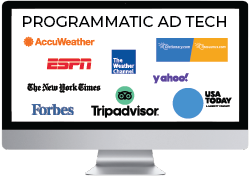
This is where the Mutual Brand Equity Model moves from concept to execution.
Partnering with the right suppliers, the ones already serving your members, turns every sponsorship into a statement of unity. It says: the best companies in our space stand behind this mission. Advertisers gain trusted visibility. Associations gain both revenue and credibility. The entire ecosystem wins.
When associations treat advertisers as stakeholders rather than transactions, they turn monetization into relationship capital. That is the most renewable form of revenue there is.
Fair question, and it deserves numbers rather than adjectives. Two kinds of evidence matter: network-level results and program-level results.
At the network level, association partners working with TAP have received over $6,000,000 in non-dues revenue distributions since 2018, generated across website placements, newsletter sponsorships, retargeting, and dedicated emails, with more than 300 million ad impressions delivered across 70+ association partners.
Consider a national trade association we work with. Before implementing this model, their website generated modest revenue from a mix of scattered, low-value ads. Member trust was slipping, and their most reputable suppliers weren't interested in participating.
By applying the Mutual Brand Equity Model, we helped them define visual and brand standards, eliminate noise, and launch a structured "Founding Partner" program. Then we managed outreach, positioning these opportunities as strategic collaborations rather than ad buys.
Within 18 months, their website revenue increased substantially, renewal rates now exceed 85%, and one featured partner signed a multi-year agreement.
They didn't just find more revenue; they repositioned themselves as the digital heartbeat of their industry.
Here is the implementation roadmap:
The common pitfalls:
Every misstep stems from the same oversight: forgetting that credibility is the product. Protect it like revenue depends on it, because it does.
Website monetization done right doesn't look like clutter. It looks like collaboration. It says: our industry's leaders invest in this organization because they believe in its mission, and we're proud to showcase them.
That is Mutual Brand Equity in action. It turns monetization into shared advocacy and transforms your website from an information hub into the ecosystem where mission, members, and market align.
The Association Partner implements the Mutual Brand Equity Model and other non-dues revenue strategies for professional and trade associations. Let's talk about what your digital assets could realistically earn.
Contact Us Today